You’re enjoying a meal when suddenly you feel something hard in your mouth that doesn’t belong there. You realize with worry that your dental filling has come loose or fallen out completely.
This common dental problem can happen while eating crunchy foods, chewing hard candy, or even during a regular meal.
If your filling falls out, you should call your dentist right away to schedule an appointment and protect the exposed tooth until you can get professional treatment.
The good news is that a lost dental filling emergency isn’t usually a true emergency. You can take simple steps to care for your tooth and manage any discomfort before your dental visit.
Understanding what to do if you lose a filling while eating can help you avoid further damage to your tooth. The exposed area is now more vulnerable to bacteria and decay.
Acting quickly and following the right steps will keep your tooth safe until your dentist can replace the filling.
Key Takeaways
- Call your dentist immediately when a filling falls out to schedule a repair appointment and get advice on protecting your tooth
- Keep the exposed tooth clean and avoid chewing on that side until you receive professional treatment
- Dental fillings can become dislodged due to new decay, grinding your teeth, biting hard foods, or normal wear over time
Table of Content
- Immediate Actions to Protect Your Tooth
- Risks of an Untreated Missing Filling
- Professional Restoration and Treatment Options
- Common Reasons Fillings Become Dislodged
- Prevention and Long-Term Oral Care Tips
- Frequently Asked Questions
Immediate Actions to Protect Your Tooth
When your filling falls out while eating, quick action can prevent further damage and reduce discomfort.
You need to protect the exposed tooth structure, keep the area clean, and manage any pain until you can see your dentist.
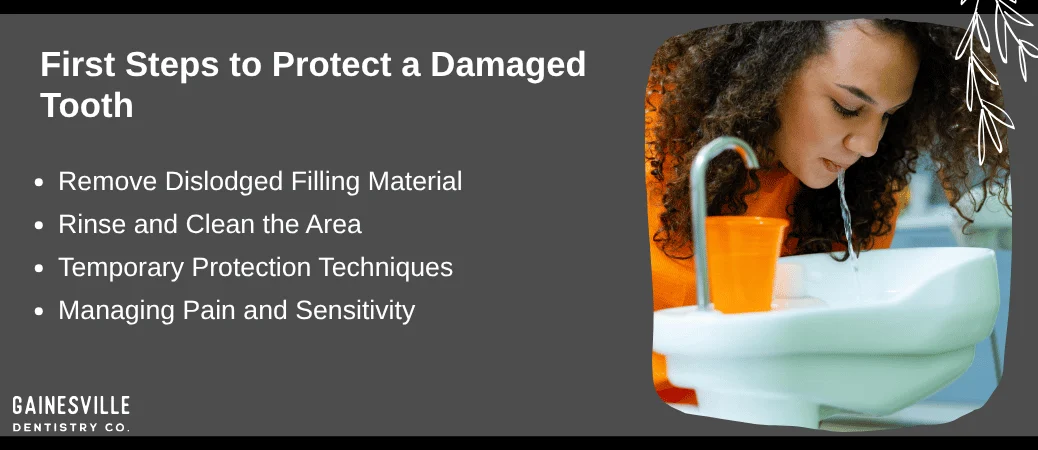
Remove Dislodged Filling Material
If you notice the filling came out while chewing, stop eating right away. Carefully remove the filling piece from your mouth to avoid swallowing it or biting down on it, which could crack your other teeth.
Look at the affected tooth in a mirror if possible. You might see a hole or gap where the filling used to be. Don’t try to put the old filling back in, as it won’t bond properly and could introduce bacteria.
Keep the old filling if you can find it. While your dentist won’t reuse it, seeing the piece can help them understand what happened and plan your treatment.
Rinse and Clean the Area
Gently rinse your mouth with warm salt water to clean the exposed tooth and reduce bacteria. Mix half a teaspoon of salt into 8 ounces of warm water. Swish it around for 30 seconds, then spit it out.
This simple rinse helps protect the exposed dentin from infection. Salt water is a natural antibacterial agent that reduces inflammation without irritating the sensitive area.
Brush your teeth carefully, but be extra gentle around the tooth where my filling fell out. Use a soft-bristled toothbrush and avoid putting pressure directly on the exposed spot. Continue flossing your other teeth, but skip the damaged tooth to prevent further irritation.
Temporary Protection Techniques
You can buy temporary filling kits at drugstores or online to protect the tooth until your appointment. These kits include temporary filling material (dental cement) that you apply directly to the exposed area.
Follow the kit instructions carefully. Clean and dry the tooth first, then press the temporary filling into the gap. This protection prevents food from getting stuck and reduces sensitivity.
If you don’t have access to a kit, dental wax works as an alternative. You can find it at most pharmacies. Press a small amount over the exposed tooth to create a barrier.
Your dentist will remove this temporary filling before applying a permanent one.
Avoid chewing on the affected side of your mouth. Stick to soft foods and don’t eat anything sticky, crunchy, or hard until you get proper treatment.
Managing Pain and Sensitivity
The exposed tooth may hurt when air, pressure, or temperature touches it. Take over-the-counter pain medication like Ibuprofen (Advil) or acetaminophen (Tylenol) following the recommended dosage on the package.
Apply numbing agents like Orajel or Anbesol directly to the affected area for quick relief. These products contain ingredients that temporarily numb the exposed nerve endings.
Use a clean cotton swab to apply a small amount to the tooth and surrounding gum.
Clove oil offers natural pain relief because it contains eugenol, which has numbing properties. Apply one or two drops to a cotton ball and hold it against the tooth for a few minutes.
If you have swelling, wrap an ice pack in a cloth and hold it against your cheek for 20 minutes. This reduces inflammation and provides comfort.
Call your dentist right away to schedule an appointment, as waiting too long can turn a simple problem into a dental emergency.
Risks of an Untreated Missing Filling
When a filling falls out, your tooth becomes vulnerable to bacteria and damage. The exposed area can quickly lead to decay, discomfort, and more serious dental problems that require extensive treatment.
Increased Tooth Decay Risk
A missing filling leaves your tooth defenseless against bacteria and food particles. The exposed dentin acts like an open door for decay to develop rapidly.
Secondary decay is a major concern when you delay treatment. The cavity that once held your filling provides a perfect spot for bacteria to gather and multiply.
Without the protective barrier of your dental restoration, decay can spread deeper into your tooth structure much faster than it did originally.
Your tooth is especially at risk if you consume sugary foods and drinks. Bacteria feed on sugar and produce acid that eats away at your tooth.
The exposed cavity creates an ideal environment where plaque builds up easily and cleaning becomes difficult.
Sensitivity and Pain Concerns
You’ll likely notice sensitivity right away when your filling falls out. Exposed dentin contains tiny tubes that connect to the nerves inside your tooth.
This makes your tooth react sharply to hot drinks, cold beverages, sweet foods, and even air.
The discomfort can make eating and drinking unpleasant. You might find yourself avoiding certain foods or chewing only on one side of your mouth.
Cold water or ice cream can trigger sudden sharp pain that stops you mid-bite.
This sensitivity often gets worse over time if you don’t get treatment. As bacteria move deeper into your tooth, the nerve becomes more irritated and inflamed.
What starts as mild discomfort can turn into constant throbbing pain that affects your daily life.
Potential for Further Damage
Your tooth becomes structurally weak without its filling. The remaining tooth structure is more likely to crack or break under normal chewing pressure. Even biting into soft foods can cause pieces of your tooth to chip away.
If decay reaches the inner pulp of your tooth, you’ll need root canal treatment instead of a simple filling replacement. A root canal costs significantly more and requires multiple dental visits.
The procedure removes infected tissue from inside your tooth and requires a crown for protection.
In severe cases, the tooth may need extraction if the damage becomes too extensive to repair.
You could also develop a dental abscess, which is a painful infection that can spread to surrounding tissues and requires immediate attention.
Professional Restoration and Treatment Options
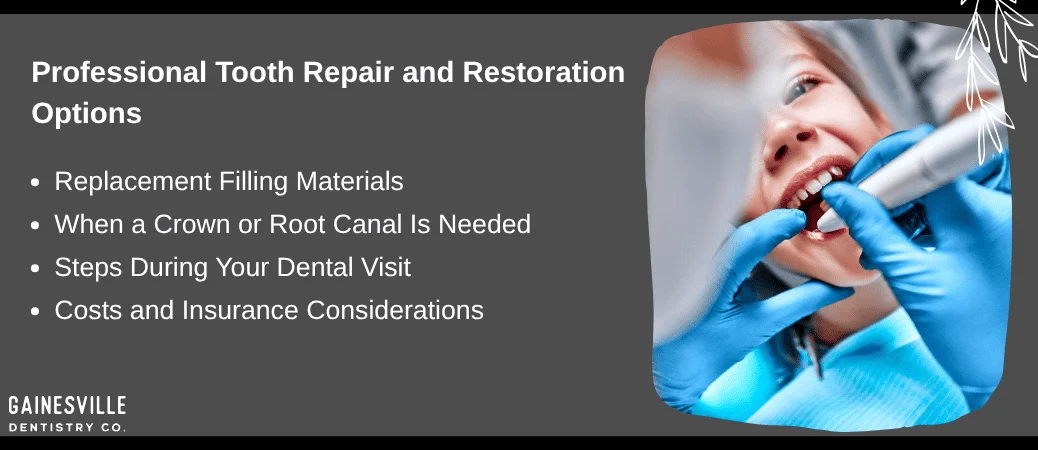
During a restorative care procedure, your dentist will examine your tooth and recommend the best way to fix it based on how much damage occurred.
Treatment options range from simple filling replacements to more complex procedures like crowns or root canals.
Replacement Filling Materials
Your dentist can choose from several types of filling materials to restore your tooth. Composite resin fillings are tooth-colored and work well for front teeth where appearance matters most.
These composite fillings bond directly to your tooth and look natural when you smile or talk.
Amalgam fillings are silver-colored and very durable. They work best for back teeth that do a lot of chewing work.
Many dentists still use amalgam for molars and premolars because it lasts a long time under heavy pressure.
Glass ionomer fillings release fluoride to help protect your tooth from future decay. They’re often used in areas that don’t handle much chewing force.
Gold fillings are another option that can last 15 years or more, though they cost more and require multiple visits to place.
Your dentist will help you pick the right material based on which tooth needs repair, how much it will show when you smile, and your budget.
When a Crown or Root Canal Is Needed
Sometimes a simple filling won’t be enough to fix your tooth. If there’s a deep cavity or exposure to the tooth’s nerve, your dentist will refer you to a specialist for root canal treatment and a dental crown.
A root canal becomes necessary when decay reaches the nerve inside your tooth. The specialist removes the infected nerve tissue, cleans the inside of the tooth, and seals it.
A dental crown then goes over the tooth to protect it and restore its shape.
In rare cases, the loss of a filling or fractured tooth may be so severe that the only option is extraction. If this happens, your dentist will discuss replacing the tooth with a bridge or dental implant.
Steps During Your Dental Visit
Your dentist will start by examining your tooth and taking X-rays to see how much damage exists. The X-rays show if decay spread under the old filling or deeper into your tooth.
If you need a new filling, your dentist will numb the area and remove any remaining old filling material. They’ll clean out any decay and shape the space to hold the new filling.
The type of filling material affects how long this takes.
For composite resin fillings, your dentist applies the material in layers and uses a special light to harden each layer. Amalgam fillings get packed into place and shaped to match your bite.
Your dentist will check that the new filling feels comfortable when you bite down before you leave.
Costs and Insurance Considerations
The cost of fixing your tooth depends on what type of dental restoration you need. A basic filling replacement typically costs less than more complex treatments.
Amalgam fillings usually cost $50 to $150 per tooth, while composite fillings range from $90 to $250.
Dental crowns cost significantly more, often between $800 and $1,500 per tooth. Root canal treatment adds another $700 to $1,200 to your bill depending on which tooth needs treatment.
Most dental insurance plans cover at least part of the cost for basic dental fillings. Insurance typically pays 50% to 80% of filling costs after you meet your deductible. Coverage for crowns and root canals varies more between plans.
Check with your insurance company before your appointment to understand what they’ll cover. Many dental offices offer payment plans if you need to spread out the cost over several months.
Common Reasons Fillings Become Dislodged
Dental fillings can fall out for several reasons, from normal aging of the material to daily habits that put extra stress on your teeth.
Understanding why fillings fall out helps you protect your dental work and avoid future problems.
Wear and Tear Over Time
Fillings don’t last forever. Over the years, the materials break down from constant use in your mouth.
Amalgam fillings typically last 5 to 25 years, while composite fillings last 5 to 15 years. Gold fillings can last the longest at 15 to 30 years. The lifespan depends on the filling’s size and location in your mouth.
Large fillings face more stress than small ones. Back teeth that do most of the chewing work wear out fillings faster than front teeth.
The size and position affect how long a filling lasts, especially if they absorb high chewing forces.
Chemical reactions between filling materials and your saliva can also weaken the bond over time. Temperature changes from hot and cold foods make the materials expand and contract, which creates small cracks.
Biting and Chewing Habits
What you eat and how you eat it plays a big role in keeping your fillings in place. Hard and crunchy foods create strong forces that can break the bond between the filling and your tooth.
Chewing too hard or biting into hard foods like ice, hard candy, nutshells, or toasted bagels can dislodge fillings. Sticky, sugary foods also cause problems because they pull on dental work while increasing your risk of decay.
Try to avoid chewing on hard objects like pen caps or fingernails. Be careful with foods that require extra force to bite through. These simple changes protect your fillings from unnecessary stress.
Poor Oral Hygiene and New Decay
Bacteria getting into the edges of a filling is one of the most common reasons dental fillings become loose. Decay around the filling weakens the bond between the material and your tooth.
This secondary decay happens when you don’t brush and floss regularly. Food particles and bacteria build up around the filling’s edges, creating new cavities underneath or beside the existing filling.
When tooth decay spreads, it destroys the healthy tooth structure that holds the filling in place. The filling then has nothing solid to grip onto.
Regular brushing twice a day with fluoride toothpaste and daily flossing prevent this problem.
Skipping dental checkups also increases your risk. Your dentist can spot weak areas around fillings before they fail.
Teeth Grinding and Bruxism
Grinding your teeth puts extreme pressure on your fillings. Many people grind their teeth while sleeping without realizing it.
Bruxism creates forces much stronger than normal chewing. This constant grinding wears down both your natural teeth and your fillings. The repeated pressure loosens the filling material and can crack it.
Clenching your jaw throughout the day has the same effect. You might clench when you’re stressed or concentrating on tasks.
If you grind your teeth, talk to your dentist about wearing a mouth guard at night. This protective device cushions your teeth and takes the pressure off your fillings.
A splint is another option that keeps your teeth separated while you sleep.
Prevention and Long-Term Oral Care Tips
Good oral hygiene and regular dental visits help dental fillings last longer and reduce the chance they’ll fall out unexpectedly.
Making smart choices about what you eat and using the right dental care products can protect your fillings for many years.

Daily Oral Hygiene Best Practices
Brushing twice a day and flossing once daily keeps your fillings secure by preventing decay around them. Use a soft-bristled toothbrush and fluoride toothpaste to gently clean around your dental restorations without causing damage.
When you floss near a filling, be gentle. Pull the floss out sideways instead of lifting it straight up, which could put pressure on the filling and loosen it over time.
Rinse with an antibacterial mouthwash to kill bacteria that cause decay around fillings.
This extra step helps protect both your natural teeth and your dental restorations from harmful bacteria that weaken the bond between the filling and your tooth.
Pay special attention to the edges where your filling meets your tooth. These spots collect food particles and bacteria more easily than other areas.
Regular Dental Checkups
Your dentist can spot problems with fillings before they fall out. Schedule checkups every six months so your dentist can examine your fillings for cracks, wear, and signs they’re coming loose.
During these visits, your dentist uses special tools to check if your fillings are properly sealed to your teeth. They can identify weak spots that you can’t see or feel on your own.
Preventing fillings from falling out becomes much easier when your dentist catches issues early and replaces worn fillings before they fail.
Different filling materials last different lengths of time, and your dentist tracks how old each filling is.
If a filling shows signs of wear, replacing it proactively saves you from dealing with a lost filling emergency later. Your dentist might recommend replacing old fillings even if they haven’t caused problems yet.
Avoiding Risk Factors
Hard and sticky foods damage fillings more than soft foods. Avoid chewing ice, hard candies, and popcorn kernels with your filled teeth.
Sticky foods like caramel and taffy can pull fillings right out of your teeth. Choose softer snacks when possible to reduce stress on your dental work.
If you grind your teeth at night, ask your dentist about a mouthguard. Grinding puts constant pressure on fillings and wears them down faster than normal chewing.
Limit acidic and sugary foods that weaken both your teeth and your fillings. Soda, citrus fruits, and candy create an environment where decay can develop around the edges of fillings.
Don’t use your teeth as tools to open packages or bottles. This puts extreme pressure on your teeth and can crack or dislodge fillings instantly.
Products for Fillings Care
Keep a temporary filling kit at home in case a filling falls out unexpectedly. These kits contain dental wax or filling material you can use until you see your dentist.
Dental wax protects exposed areas and reduces sensitivity when you can’t get to the dentist right away. Apply it carefully to cover the gap left by a lost filling.
Look for toothpaste designed for sensitive teeth if your fillings cause discomfort. These products contain ingredients that block pain signals from exposed tooth surfaces.
Consider purchasing a water flosser to clean around fillings more gently than traditional floss. The water pressure removes food particles without putting mechanical stress on your dental restorations.
Stock pain relievers like ibuprofen in your medicine cabinet for temporary relief if a filling becomes loose or falls out.
Cold compresses applied to the outside of your cheek also help reduce discomfort until you can see your dentist.
Frequently Asked Questions
Losing a filling while eating brings up many questions about immediate care, timing, and what to expect from dental treatment.
Most concerns focus on managing discomfort at home and understanding how quickly you need professional help.
What should I do right away if my filling comes out and I’m not in pain?
Even without pain, you should call your dentist to schedule an appointment as soon as possible. The exposed tooth is vulnerable to bacteria and decay even if it doesn’t hurt yet.
Rinse your mouth gently with warm salt water to clean the area. Avoid chewing on the side where the filling fell out to prevent further damage to the tooth.
Keep the area as clean as possible by brushing gently around the affected tooth. Food particles and bacteria can easily get into the empty space left by the filling.
How can I protect the tooth at home if I can’t see a dentist right away?
You can buy temporary dental cement at most pharmacies to cover the exposed tooth until your appointment. This creates a protective barrier over the sensitive area.
Apply the temporary cement according to the package directions. It’s designed to stay in place for a few days but isn’t a permanent solution.
Keep the tooth clean by rinsing with warm salt water after meals. Avoid sticky, hard, or chewy foods that could pull out the temporary filling or damage the tooth further.
What can I do if a filling falls out on a weekend or holiday?
Call your regular dentist first, as many have emergency contact numbers or weekend hours. If you can’t reach them, look for a dental urgent care clinic in your area.
Use temporary dental cement from a pharmacy to protect the tooth until you can get professional care.
Take over-the-counter pain medication like ibuprofen if you’re experiencing discomfort.
Apply clove oil to the exposed tooth if you’re feeling pain or sensitivity. You can also use a whole clove placed near the affected area.
How long is it usually safe to wait before getting a lost filling replaced?
You should see your dentist within a few days at most. Waiting too long can cause damage to the unprotected tooth and lead to more serious problems.
Bacteria and food particles stick into the empty space and cause decay quickly. The exposed dentin layer is softer than enamel and breaks down faster when unprotected.
Delaying treatment may require more extensive work like a crown or root canal instead of a simple filling replacement. The longer you wait, the higher the risk of infection or tooth fracture.
What will the dentist likely do during the appointment to fix a missing filling?
Your dentist will first examine the tooth to check for new decay or damage. They’ll clean out the cavity and remove any damaged tooth material.
If the tooth is healthy underneath, they’ll place a new filling just like the original one. The process typically takes 30 to 60 minutes depending on the size and location.
If decay or damage has spread, you might need additional work like a root canal or crown. Your dentist will explain any extra procedures needed before starting treatment.
What does it mean if the tooth looks dark or black where the filling came out?
Dark or black coloring usually indicates tooth decay underneath where the filling was. This decay may be why your filling fell out in the first place.
The darkness could also be staining from the old filling material, especially if it was an amalgam filling. Your dentist will need to examine it to determine the exact cause.
You’ll likely need the decay removed before getting a new filling. In some cases, extensive decay might require a crown or other restoration instead of just a filling replacement.