Dental pain doesn’t follow a schedule. A cracked tooth or sudden toothache can happen at any time and leave you searching for quick relief.
When you face a dental emergency in Gainesville, FL, you need to know where to turn and what problems can be treated right away.
Same-day emergency dentists in Gainesville can treat toothaches, broken teeth, knocked-out teeth, lost fillings or crowns, abscesses, soft tissue injuries, and other urgent dental problems that require immediate attention.
Understanding what counts as a dental emergency and knowing your treatment options helps you act quickly when oral health problems strike.
Emergency dental care gives you fast pain relief and prevents minor issues from turning into bigger problems that cost more time and money to fix.
Key Takeaways
- Emergency dentists treat toothaches, broken teeth, infections, and injuries with same-day appointments
- Quick action and proper first aid can save a tooth and reduce pain until you see a dentist
- Regular dental checkups and good habits at home help prevent many dental emergencies from happening
Common Dental Emergencies and Immediate Solutions
Dental emergencies require quick action to prevent further damage and relieve pain. Understanding which urgent dental problems need professional care helps you respond effectively when issues arise.
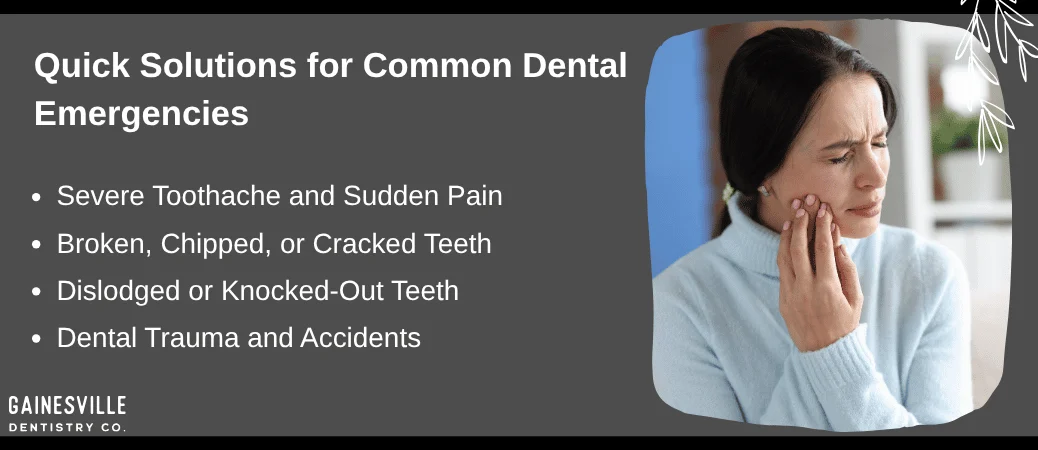
Severe Toothache and Sudden Pain
A severe toothache often signals a tooth infection, deep cavity, or abscess that needs immediate attention. The pain may feel sharp, throbbing, or constant, and it can worsen when you eat or drink hot and cold items.
You should rinse your mouth with warm salt water to reduce inflammation. Take over-the-counter pain medication as directed on the package. Avoid placing aspirin directly on your gums, as this can burn the tissue.
Emergency dentists in Gainesville can diagnose the cause of your toothache and provide relief. They may need to treat an infection with antibiotics or perform a root canal.
Don’t wait to seek help if you have swelling in your face or fever along with tooth pain.
Broken, Chipped, or Cracked Teeth
A broken or cracked tooth can happen from biting hard food, sports injuries, or accidents. You might notice sharp edges, pain when biting, or sensitivity to temperature changes.
Save any tooth fragments you can find and rinse your mouth with warm water. If bleeding occurs, apply gauze to the area for about 10 minutes. Use a cold compress on your face to reduce swelling.
Emergency dental services can repair chipped or cracked teeth with bonding, crowns, or veneers.
Small chips may not require immediate medical attention, but larger breaks that expose the inner tooth need prompt treatment. This prevents infection and saves the tooth structure.
Dislodged or Knocked-Out Teeth
When a tooth gets knocked out completely, time matters most for successful re-implantation. You have about 30 minutes to an hour for the best chance of saving the tooth.
Pick up the tooth by the crown, not the root. Rinse it gently with water if dirty, but don’t scrub or remove any attached tissue.
Try to place it back in the socket if possible. If you can’t, keep it in milk or between your cheek and gums.
Get to an emergency dentist right away. They can re-implant the tooth and secure it with a splint. For partially dislodged teeth that feel loose, avoid touching them with your tongue and seek care immediately.
Dental Trauma and Accidents
Dental trauma includes injuries to your teeth, gums, lips, or jaw from falls, sports, or vehicle accidents. These injuries can cause bleeding, swelling, or damage to multiple teeth at once.
Control bleeding by applying clean gauze or cloth with firm pressure. Use ice packs to manage swelling and pain. Check if any teeth are loose, broken, or missing.
Emergency dental care locations handle complex trauma cases with advanced equipment and expertise. They assess damage to your oral health and create treatment plans.
Serious accidents may require stitches, tooth stabilization, or referral to specialists for jaw injuries.
Urgent Treatments Offered by Emergency Dentists
Emergency dentists in Gainesville provide immediate care for painful dental problems that can’t wait for a regular appointment.
These urgent treatments address severe pain, infections, damaged teeth, and other conditions that need quick attention to prevent complications.
Emergency Tooth Extraction
Sometimes a tooth is too damaged or infected to save. Emergency tooth extractions remove severely damaged or infected teeth to stop pain and prevent the infection from spreading to other areas of your mouth.
Your emergency dentist will numb the area before the extraction so you don’t feel pain during the procedure. After removing the tooth, they’ll give you instructions on how to care for the extraction site.
You’ll need to avoid drinking through straws and eating hard foods for a few days while the area heals.
Emergency extractions are common for teeth with advanced decay, severe breaks below the gum line, or infections that don’t respond to antibiotics.
The dentist will discuss replacement options like dental implants or bridges during your follow-up visits.
Root Canal Therapy for Infections
A tooth infection can cause intense throbbing pain that gets worse when you bite down or touch the tooth.
Emergency dental services for infections include root canal therapy to remove infected tissue from inside your tooth.
During the procedure, your dentist removes the infected pulp, cleans the inside of the tooth, and seals it to prevent future infections.
Root canals save your natural tooth so you don’t need an extraction. Many patients feel relief from pain almost immediately after the procedure.
You might need antibiotics along with the root canal if the infection has spread. Your dentist will place a temporary filling first, then you’ll return for a permanent crown to protect the treated tooth.
Repairing Lost Fillings or Crowns
Lost fillings or crowns expose sensitive tooth structure to food, bacteria, and temperature changes. This causes sharp pain and puts your tooth at risk for further damage or decay.
Your emergency dentist can repair lost fillings or crowns during your same-day appointment. They’ll clean the tooth, remove any decay that developed, and place a new filling or recement your crown.
If your original crown is damaged, they can make a temporary one until a permanent replacement is ready.
Bring your lost crown with you to the appointment if you still have it. Sometimes the dentist can clean and recement the same crown if it’s still in good condition.
Managing Objects Stuck Between Teeth
Food or small objects wedged tightly between your teeth cause pain, swelling, and damage to your gums. Trying to remove stuck objects yourself with sharp tools can injure your gums or push the object deeper.
Emergency dentists have specialized tools to safely remove objects without harming your teeth or gums. They’ll examine the area for any cuts or damage after removal.
If your gums are swollen or bleeding, they’ll provide treatment to help them heal properly.
You should seek urgent dental care right away if an object is stuck and causing pain. Don’t wait, as prolonged pressure can damage your teeth and create spaces where bacteria can grow.
Restorative and Cosmetic Dental Solutions in Emergencies
Dental emergencies often require more than just pain relief. Many situations need restorative work to repair damaged teeth or cosmetic fixes to restore your smile’s appearance.
Emergency Dental Implants
Emergency dental implants can replace teeth that have been knocked out or need immediate extraction due to severe damage.
If you lose a tooth in an accident, a same-day implant consultation helps preserve your jawbone and prevent neighboring teeth from shifting.
The process starts with an evaluation to determine if you’re a good candidate for immediate placement. Your dentist will check if you have enough bone density and healthy gums to support the implant.
Some patients can receive a temporary implant post on the same day, though the permanent crown usually comes later.
Immediate benefits include:
- Prevention of bone loss in the jaw
- Maintained facial structure and appearance
- No need for removable dentures
- Quick restoration of chewing function
Not every situation allows for same-day implant placement. Your dentist might recommend a healing period first if you have an infection or insufficient bone structure.
Temporary and Permanent Crowns
A crown protects and restores a damaged tooth after trauma or severe decay. Dental services in Gainesville include both temporary and permanent crown options during emergency visits.
Temporary crowns get placed immediately to protect your tooth while a permanent one is being made. They’re typically made from acrylic or composite material and can be created in the office within an hour.
You’ll wear this for one to three weeks.
Permanent crowns are stronger and match your natural teeth better. Modern technology allows some dental offices to create these using digital scanning and milling equipment on the same day.
Traditional crowns take longer because they’re made in a dental lab.
Crown care tips:
- Avoid sticky or hard foods with temporary crowns
- Brush gently around the crown area
- Report any looseness immediately
Cosmetic Dentistry Options After Trauma
Accidents that damage your front teeth affect both your oral health and confidence. Cosmetic dentistry treatments can repair chips, cracks, and discoloration during emergency visits.
Dental bonding fixes minor chips quickly using tooth-colored resin material. Your dentist shapes and polishes the resin to match your surrounding teeth. This process takes 30 to 60 minutes per tooth.
Veneers offer a more permanent solution for severely damaged front teeth. While traditional veneers require multiple visits, some practices offer same-day options.
These thin shells cover the front surface of your tooth to restore its appearance.
For teeth that are darkened after trauma, professional whitening or bonding can improve their color. Your dentist will assess the damage and recommend the best approach to restore your smile’s natural look.
How and When to Seek Immediate Dental or Medical Care
Knowing whether to visit an emergency dentist or hospital can save your tooth and protect your overall health.
Some dental problems need quick dental treatment, while others require immediate medical attention at a hospital emergency room.
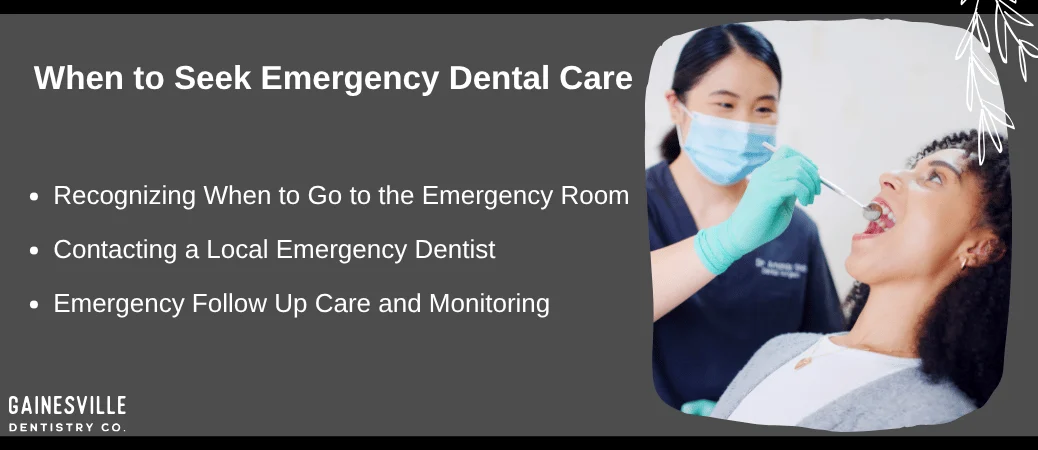
Recognizing When to Go to the Emergency Room
You should go to the emergency room if your dental problem affects your breathing, swallowing, or overall health.
Severe facial swelling that closes your eye or spreads to your neck needs immediate medical attention. Uncontrolled bleeding that won’t stop after 15 minutes of pressure requires hospital care.
A high fever over 101°F with facial swelling might mean a serious infection spreading beyond your mouth. Trauma to your jaw or face from an accident could involve broken bones that need emergency medical care.
If you feel dizzy, have chest pain, or struggle to breathe along with dental pain, call 911 right away.
Deep cuts to your lips, tongue, or face may need stitches from an emergency room doctor. A dental abscess that causes severe swelling in your throat area can block your airway and requires hospital treatment.
Contacting a Local Emergency Dentist
Most dental emergencies can be handled by emergency dentists in Gainesville who offer same-day appointments. Call an emergency dentist for severe toothaches, knocked-out teeth, broken teeth, or lost fillings.
Many offices provide care from 6:00 am to 6:00 pm seven days a week.
Emergency dental services can address infections, abscesses, cracked crowns, and gum injuries. If your tooth gets knocked out, rinse it gently and try placing it back in the socket.
Store it in milk or saliva if you can’t reinsert it, then seek care within 30 minutes for the best chance of saving it.
For severe pain before your appointment, take over-the-counter pain relievers and use a cold compress on your face. Avoid chewing on the affected side and rinse with warm salt water.
Emergency Follow Up Care and Monitoring
After receiving same-day emergency treatment, you’ll need to follow your dentist’s instructions carefully. Take all prescribed antibiotics even if you feel better.
Watch for signs that your condition is getting worse, like increased swelling or fever.
Schedule a follow-up appointment within a few days to make sure you’re healing properly. Call your dentist right away if pain increases, swelling spreads, or you develop new symptoms.
Some treatments like root canals or extractions need additional visits to complete the work.
Keep the treatment area clean by gently brushing and rinsing as directed. Avoid hard or sticky foods that could damage temporary repairs. Your dentist will tell you when it’s safe to return to normal eating habits.
Tips for Preventing Dental Emergencies
Regular dental care and smart daily choices can protect your teeth from unexpected problems. Simple steps like brushing properly and wearing protective gear during activities can help you avoid painful situations that require urgent care.
Oral Hygiene and Routine Teeth Cleanings
Good oral hygiene forms the foundation of preventing dental emergencies. You should brush your teeth twice daily for two minutes each time using fluoride toothpaste.
Flossing once a day removes food particles and plaque between teeth where your toothbrush can’t reach.
Regular teeth cleanings at your dentist’s office every six months help catch problems early. During these visits, your dentist can spot weak spots in your teeth, gum disease, or cavities before they turn into emergencies.
Professional cleanings remove hardened plaque that regular brushing misses.
Your oral health depends on consistency. Skipping dental appointments or ignoring minor tooth pain can lead to bigger problems later.
When you maintain a routine, you give your Gainesville dental team the chance to prevent issues that might otherwise require emergency treatment.
Protective Measures for Sports and Accidents
Wearing a mouthguard during sports protects your teeth from impact injuries. Custom-fitted mouthguards from your dentist offer the best protection, but store-bought versions work too.
You should wear one for contact sports like football, basketball, and hockey.
Activities requiring mouthguards include:
- Football and rugby
- Basketball and soccer
- Hockey and lacrosse
- Skateboarding and rollerblading
- Martial arts and boxing
Beyond sports, you can prevent dental emergencies by avoiding risky habits. Don’t use your teeth to open packages, crack nuts, or hold objects.
These actions can chip or break your teeth instantly. Keep hard objects like ice cubes and popcorn kernels away from your teeth to avoid cracks.
Healthy Habits and Lifestyle Choices
What you eat affects your teeth’s strength and durability. Limit sugary foods and drinks that feed harmful bacteria in your mouth.
Acidic beverages like soda and citrus juices weaken tooth enamel over time, making teeth more likely to crack or develop cavities.
Staying hydrated with water helps wash away food particles and bacteria. Drinking water also promotes saliva production, which naturally protects your teeth.
If you grind your teeth at night, ask your dentist about a nightguard to prevent damage.
Avoid chewing on hard items like pen caps or fingernails. These habits put unnecessary stress on your teeth.
Smoking and tobacco use increase your risk of gum disease and other oral health problems that can lead to emergencies. Making healthier choices today means fewer urgent dental visits tomorrow.
Guidance on Managing Dental Emergencies at Home
Knowing how to respond when a dental emergency strikes can help reduce pain and prevent further damage until you reach professional care.
Taking the right steps at home makes a significant difference in protecting your tooth and improving your overall outcome.
What to Do in a Dental Emergency
The first thing you should do is stay calm and assess the situation. A dental emergency is any condition that causes pain or bleeding, including knocked-out teeth, broken teeth, severe toothaches, or injuries to your gums.
Some situations require immediate medical attention before seeing a dentist. You should go to the emergency room or call 911 if you experience:
- Uncontrolled bleeding
- Difficulty breathing or swallowing
- Severe swelling that affects your eyes or ability to breathe
- Trauma to your jaw or face
If you’re unsure whether your situation is truly urgent, treat it as an emergency and get medical help first. After that, contact a dentist for follow-up care.
For less severe issues like a toothache or chipped tooth, call your dentist right away. Many dental offices offer same-day appointments for emergencies.
Steps Before Visiting the Dentist
Taking proper action before your dental appointment can save your tooth and reduce complications. For a knocked-out tooth, find it immediately and handle it only by the crown, not the root.
Rinse it gently with water if it’s dirty, but don’t scrub or remove any attached tissue.
Try to place the tooth back in its socket if possible. If you can’t do that, keep it moist by placing it in a container of milk or holding it between your cheek and gums.
Time matters greatly with knocked-out teeth, so get to a dentist within 30 minutes.
For a broken or chipped tooth, rinse your mouth with warm water and save any pieces you can find. If there’s bleeding, apply gauze to the area for about 10 minutes or until the bleeding stops.
Relieving Pain and Minimizing Damage

Managing pain at home helps you stay comfortable until you can receive professional emergency dental care. Take over-the-counter pain medication like ibuprofen or acetaminophen according to package directions.
Never place aspirin directly on your gums or tooth, as it can burn the tissue.
Apply a cold compress to the outside of your cheek for 15-20 minutes at a time to reduce swelling and numb the area. This works especially well for injuries that cause facial swelling.
Rinse your mouth gently with warm salt water several times a day. Mix half a teaspoon of salt in eight ounces of warm water. This helps clean the area and can provide some relief.
Avoid these actions:
- Don’t eat hard, crunchy, or sticky foods
- Don’t chew on the affected side
- Don’t touch the injury with your fingers or tongue
- Don’t use heat, which can make swelling worse
If you have something stuck between your teeth, try using dental floss gently. Never use sharp objects like pins or needles, which can damage your gums or push the object deeper.
Frequently Asked Questions
People in Gainesville often have similar questions about emergency dental care, especially when they need treatment fast. Knowing what counts as an emergency and where to get help can save you time and reduce pain.
What dental problems count as an emergency that needs treatment right away?
A dental emergency is any condition that causes pain or bleeding. This includes knocked-out teeth, broken teeth, severe toothaches, and injuries to your mouth or jaw.
Swelling in your face or gums also counts as an emergency. An abscess or infection can spread quickly and needs immediate attention.
Lost fillings, broken crowns, and damaged dental work can also be emergencies if they cause pain. If you’re unsure whether your problem needs urgent care, it’s better to call a dentist and ask.
Some situations require emergency room care before you see a dentist. Get immediate medical help if you have trouble breathing or swallowing, uncontrolled bleeding, or severe facial swelling.
Can I get a same-day appointment if I have severe tooth pain or swelling?
Yes, many Gainesville dentists offer same-day emergency care for patients with severe pain or swelling. You can often get treatment on the day you call.
Some dental offices accept walk-ins for emergencies. Others ask you to call first so they can fit you into their schedule quickly.
If you have swelling along with pain, don’t wait to get help. Swelling can be a sign of infection that needs treatment right away.
Do emergency dentists treat broken, chipped, or knocked-out teeth on the same day?
Emergency dentists in Gainesville can treat broken, chipped, and knocked-out teeth during your same-day visit. These injuries need quick attention to save your tooth and prevent further damage.
If your tooth gets knocked out completely, keep it moist and get to a dentist within an hour if possible. Put the tooth in milk or hold it in your mouth next to your cheek while you travel.
For broken or chipped teeth, save any pieces you can find. Rinse your mouth with warm water and apply a cold compress to reduce swelling until you reach the dentist.
Is it possible to get an emergency tooth extraction today, and what should I expect?
You can get an emergency tooth extraction on the same day if the tooth is severely damaged, infected, or causing extreme pain. Dentists perform extractions when saving the tooth isn’t possible.
The dentist will numb the area around your tooth before removing it. You’ll feel pressure but shouldn’t feel pain during the procedure.
After the extraction, you’ll get instructions on how to care for the area. Expect some bleeding and swelling for the first day or two.
Are there any dentists open on Saturdays in Gainesville for urgent dental issues?
Some emergency dental offices in Gainesville are open Monday through Sunday from 6:00 am to 6:00 pm. This means you can get care on Saturdays and even Sundays.
Not all dental offices have weekend hours, so it’s best to call ahead. Many practices list their emergency hours on their websites.
Weekend appointments can fill up quickly. Call as early as possible on Saturday morning to increase your chances of getting seen that day.
Where can I go in Gainesville if I need urgent dental care but can’t afford it?
Many Gainesville dental offices provide emergency care and work with you on payment options. Some offices offer payment plans that let you spread the cost over several months.
Dental schools sometimes offer lower-cost emergency care provided by students under supervision. University of Florida College of Dentistry may have emergency services available.
If you’re in severe pain or have a serious infection, don’t skip treatment because of cost concerns. Talk to the dental office about your situation when you call for an appointment.