A mild toothache can wait a day or two. A true tooth infection cannot. When pain turns sharp, swelling spreads, or you start to feel sick, your body tells you something is wrong.
Your tooth infection can’t wait until Monday if you have severe pain, facial swelling, fever, trouble swallowing or breathing, uncontrolled bleeding, a loose adult tooth, or sudden changes in your bite.
These signs often point to a dental emergency that needs fast care to stop the infection from spreading.
If you ignore these tooth infection emergency signs, the infection can move into your jaw, neck, or bloodstream. Quick treatment can relieve pain, control infection, and protect your health.
Key Takeaways
- Severe pain, swelling, or fever with a toothache signals a possible dental emergency.
- Fast treatment can stop a tooth infection from spreading to other parts of your body.
- Early care often means simpler treatment and less risk to your overall health.
Table of Content
- Critical Warning Signs of a Dangerous Tooth Infection
- Red Flags of Spreading Infection and Emergency Risks
- Underlying Causes and Progression of Tooth Infections
- What to Expect From Emergency Dental Treatment
- Prevention and Long-Term Oral Health Tips
- Frequently Asked Questions
Critical Warning Signs of a Dangerous Tooth Infection
Some tooth infections move fast and affect more than just one tooth. Severe pain, visible swelling, fever, or trouble swallowing can signal a dental emergency that needs care right away.
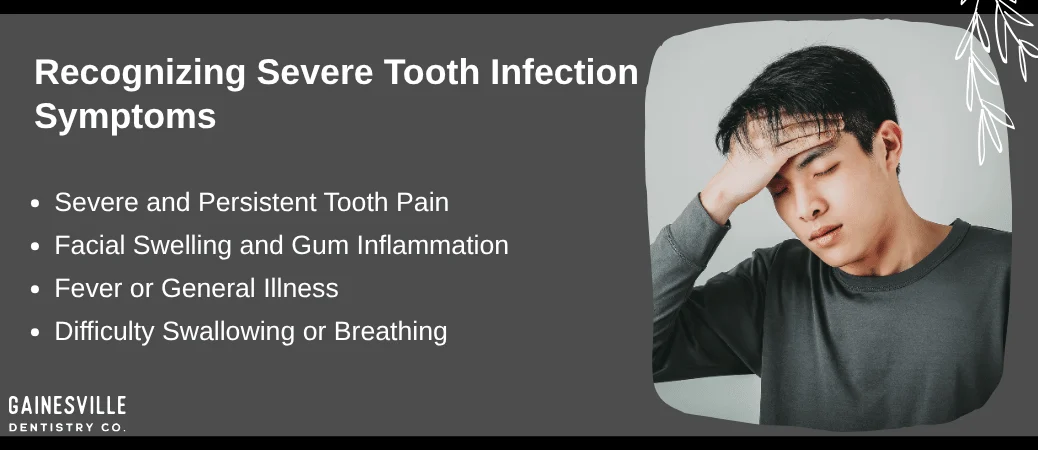
Severe and Persistent Tooth Pain
Tooth pain that does not ease up is a major red flag. A mild toothache may come and go, but a dangerous dental infection often causes constant, throbbing pain.
You may feel sharp pain when biting or chewing. The tooth can feel tender to touch, and even light pressure may hurt. This often points to a tooth abscess, which is a pocket of pus caused by bacteria.
Pain that spreads to your jaw, ear, or neck is also serious. According to these warning signs of an infected tooth, ongoing and worsening pain should never be ignored.
If over-the-counter pain medicine does not help, or the pain wakes you at night, your body is telling you the infection may be deep inside the tooth.
Facial Swelling and Gum Inflammation
Facial swelling is not normal with a simple cavity. When your cheek, jaw, or gums start to swell, you may have an abscessed tooth.
The area can look red and feel warm. Your gums may appear puffy or shiny. You might also notice a bad taste in your mouth if pus drains from the infection.
Swelling that spreads toward your eye or down your neck is more dangerous. It can mean the dental infection is moving beyond the tooth. Some people also develop swollen lymph nodes under the jaw or in the neck.
In more advanced cases, you may have trouble opening your mouth fully. This condition, called trismus, can signal that the infection is affecting deeper tissues.
Fever or General Illness
A tooth infection should stay in your mouth. If you develop a fever, your body is reacting to bacteria that may be spreading.
You might feel tired, weak, or sick to your stomach. Chills, sweating, or a fast heartbeat can also happen. These symptoms mean the infection is no longer local.
When a dental infection spreads into the bloodstream, it can lead to serious illness. Do not wait for these symptoms to pass on their own. Fever with tooth pain is a strong reason to seek urgent care.
Difficulty Swallowing or Breathing
Trouble swallowing or breathing is the most urgent warning sign. If swelling from a tooth abscess pushes into your throat or floor of your mouth, it can block your airway.
You may feel tightness in your throat. Swallowing can become painful or hard. In severe cases, you may notice trouble breathing, drooling, or a muffled voice.
These symptoms can develop quickly. This list of dangerous signs a tooth infection is spreading notes that breathing problems require immediate emergency care.
Call emergency services if you struggle to breathe. An infection that affects your airway cannot wait until Monday.
Red Flags of Spreading Infection and Emergency Risks
Some tooth infections move fast and cause serious harm. If you notice heavy bleeding, pus, or swelling that spreads, you need emergency dental care right away.

Uncontrolled Bleeding or Drainage
A small amount of blood after dental work can be normal. Uncontrolled bleeding that does not slow after 10–15 minutes is not.
If you soak through gauze again and again, or blood fills your mouth, go to an emergency department. Heavy bleeding can signal deep infection or damage to tissue.
Watch for thick drainage that tastes foul or salty. Constant fluid from the gum may mean a ruptured tooth abscess. While pressure may drop after it bursts, bacteria can still spread into nearby tissue.
Serious oral infections can move into the neck or bloodstream. In rare cases, they lead to sepsis, which causes fever, fast heart rate, and trouble breathing.
If bleeding pairs with these symptoms, seek emergency care without delay.
Visible Abscess or Pus
A dental abscess often looks like a swollen bump on your gum. It may feel soft, warm, and painful when you press it.
Pus is a clear warning sign of infection. It can appear white, yellow, or green and may drain on its own.
Do not try to pop or squeeze the area. This can push bacteria deeper into tissue.
If swelling spreads to your cheek, under your jaw, or toward your eye, treat it as urgent. In rare cases, bacteria can travel through blood vessels and cause a brain abscess or other life‑threatening problems.
Emergency dental care can drain the abscess safely and start antibiotics if needed.
Swollen Lymph Nodes and Jaw Stiffness
Your lymph nodes help fight infection. When they swell under your jaw or in your neck, your body is reacting to a growing oral infection.
You may feel:
- Tender lumps along your jawline
- Neck swelling
- Pain when you turn your head
Jaw stiffness, called trismus, is another red flag. If you struggle to open your mouth more than a small amount, infection may be spreading into deeper spaces.
Severe neck swelling with trouble swallowing or breathing can point to Ludwig’s angina, a dangerous infection under the tongue.
This condition can block your airway. Go to the emergency department right away if you notice these symptoms.
Underlying Causes and Progression of Tooth Infections
Most tooth infections begin with damage you can’t always see, like small cavities or tiny cracks. When bacteria reach the inner pulp, pain and swelling often follow.
Tooth Decay and Cavities
Tooth decay is the most common cause of a dental infection. Plaque, a sticky film of bacteria, forms on your teeth every day. When you eat sugar, plaque makes acid that wears down enamel.
Over time, this damage creates cavities. If you ignore them, bacteria can travel deeper into the tooth and infect the pulp, which holds nerves and blood vessels.
That is when a mild ache can turn into a sharp or throbbing toothache.
Early symptoms may include sensitivity to hot or cold and pain when you bite down. As the infection grows, you may notice swelling, pressure, or even fever.
Without treatment, bacteria can spread beyond the tooth root into the jaw or nearby tissue.
Cracked or Fractured Teeth
A fractured tooth can open a direct path for bacteria. Even a small crack can let germs slip past the enamel and into the softer inner layers.
You may not see the crack, but you might feel pain when chewing or when your tooth meets cold air. These signs often come and go, which makes them easy to ignore.
If the crack reaches the pulp, infection can develop fast.
Bacteria trapped inside the tooth create pressure, which leads to swelling and steady pain. In some cases, the infection forms a pocket of pus called an abscess.
Teeth with untreated fractures face a high risk of infection. Cracks and chips give bacteria easy access to the inner tooth.
Prompt care can stop the infection before it spreads to the gums or jawbone.
Poor Oral Hygiene and Plaque Buildup
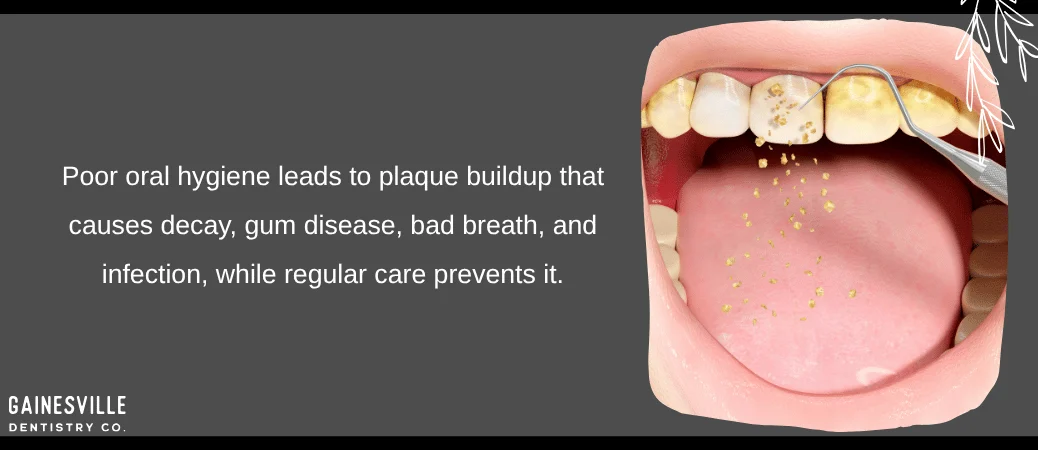
Your daily habits play a major role in preventing dental infection. When you skip brushing and flossing, plaque builds up along the gumline and between teeth.
This buildup leads to tooth decay, gum irritation, and cavities. Over time, bacteria can move from the enamel into deeper layers.
You might notice bad breath or even chronic bad breath that does not improve after brushing. That smell often comes from bacteria releasing gases as they break down food and tissue.
Regular brushing with fluoride toothpaste, daily flossing, and routine dental visits reduce plaque and lower your risk. Good oral hygiene does more than keep your smile clean.
It blocks the chain reaction that turns simple plaque into a painful tooth infection.
What to Expect From Emergency Dental Treatment
When you see an emergency dentist for a painful tooth, you can expect fast evaluation, clear answers, and treatment that stops the infection.
The goal is to remove the source of bacteria, control pain, and prevent the problem from spreading.
Root Canal Therapy and Treatment Options
If the infection sits inside the tooth, your dentist will likely recommend a root canal. This treatment removes infected pulp from inside the tooth and cleans the root canals.
You will receive local anesthesia, so you should not feel sharp pain during the procedure. The dentist makes a small opening in the tooth, removes the infected tissue, and disinfects the area.
Then they fill and seal the space to block bacteria.
Root canal therapy often relieves pain when biting and constant throbbing caused by pressure inside the tooth. In many cases, the dentist places a temporary filling first. Later, you return for a crown to protect the tooth from cracking.
Dentists confirm the infection with an exam and X-rays before starting treatment.
Common signs you may need a root canal treatment:
- Severe toothache that does not fade
- Lingering hot or cold sensitivity
- Swelling near one tooth
Tooth Extraction and Advanced Procedures

If the tooth is too damaged to save, your dentist may recommend tooth extraction. This step removes the infected tooth to stop bacteria from spreading to the jaw or bloodstream.
You will receive numbing medicine before the procedure. The dentist loosens the tooth and removes it carefully. In some cases, they make a small incision in the gum to drain pus and reduce pressure.
Extraction often brings quick relief from a painful tooth, especially when the structure is badly broken.
After healing, you can discuss long-term options like a dental implant to replace the missing tooth and restore chewing strength.
Seek urgent care if you notice facial swelling, high fever, or trouble swallowing.
Managing Pain and Preventing Complications
Emergency treatment does not stop at the procedure. Your dentist will focus on pain control and infection prevention.
You may receive:
- Antibiotics to control bacterial spread
- Anti-inflammatory medicine for swelling
- Clear home care instructions
Take all medications exactly as directed. Even if you feel better, stopping antibiotics early can allow bacteria to return.
At home, eat soft foods and avoid chewing on the treated side. Call your dentist right away if swelling worsens, fever develops, or pain increases instead of improving.
Fast treatment protects not only your tooth, but also your overall health.
Prevention and Long-Term Oral Health Tips
You can lower your risk of a painful infection by keeping your mouth clean and acting fast when something feels wrong. Simple daily habits and timely dental visits protect your teeth from plaque, decay, and serious problems.
Effective Home Care Habits
You protect your teeth every day with basic oral hygiene habits.
Brush twice a day with fluoride toothpaste. Fluoride helps strengthen enamel and makes it harder for cavities to form. Use a soft toothbrush and brush along the gumline where plaque builds up most.
Flossing matters just as much as brushing. Floss once a day to remove food and plaque between teeth where your brush cannot reach. If you skip flossing, bacteria can grow and lead to gum swelling, infection, and bad breath.
You can also:
- Rinse with an antibacterial mouthwash
- Drink fluoridated tap water when possible
- Avoid sugary drinks and snacks between meals
Small daily steps reduce the chance that decay turns into a deep infection.
When to Seek Professional Help
Home care helps, but it does not replace dental visits.
See your dentist at least once a year, even if your teeth feel fine. Dentists can spot early decay, gum disease, and other problems before they cause severe pain.
Schedule an appointment right away if you notice:
- Ongoing tooth pain
- Gum swelling
- Sensitivity that lingers
- A loose tooth without injury
These can be warning signs of an infected tooth and should not wait.
Early treatment may involve a filling, root canal, or deep cleaning. Quick care often prevents tooth loss and stops infection from spreading.
Importance of Early Intervention
Tooth infections rarely improve on their own.
If you ignore early symptoms, bacteria can spread deeper into the tooth and even into nearby tissue. Persistent pain, swelling, or a bad taste in your mouth can signal infection.
Learning to spot signs of a tooth infection before it spreads helps you act before the problem grows.
Early intervention often means simpler treatment. A small cavity may only need a filling. Waiting too long can lead to a root canal or extraction.
When you respond quickly, you protect your natural teeth. You also reduce the risk of severe pain, swelling, and emergency visits over the weekend.
Frequently Asked Questions
A tooth infection can move from mild pain to a serious health risk in a short time. Swelling, fever, and trouble swallowing are clear signs you need fast care.
What are the warning signs that a tooth infection is becoming an emergency?
You should act fast if you notice swelling in your face, jaw, or neck. Fever, chills, and feeling very weak also point to a spreading infection.
Trouble swallowing or breathing is a red flag. Severe pain that does not improve with over‑the‑counter medicine is another warning sign.
Dentists and emergency providers list facial swelling, fever, and airway problems as key signs that need urgent care.
How fast can a tooth infection spread, and what symptoms suggest it’s spreading to the brain?
A tooth infection can spread over several days or weeks if you do not treat it. The speed depends on your health and where the infection starts.
In rare cases, bacteria from an upper tooth can spread toward areas near the brain.
Warning signs include severe headache, high fever, swelling around the eyes, confusion, or vision changes. These symptoms require emergency care right away.
Can a tooth infection become life-threatening, and how long could that take?
Yes, a tooth infection can become life‑threatening if bacteria enter your bloodstream. This can lead to sepsis, which is a serious body‑wide reaction to infection.
There is no set timeline. Some people worsen over several days, while others decline over weeks if they ignore symptoms.
Ongoing severe pain, growing swelling, fever above 101°F, and feeling faint or confused are signs the infection may be spreading beyond the tooth.
When should I go to the emergency room for a tooth infection instead of waiting for a dentist?
Go to the emergency room if you have trouble breathing or swallowing. These symptoms can mean swelling is blocking your airway.
You should also seek ER care if you have large facial swelling, a high fever, or feel very ill. If you only have tooth pain and mild swelling, call an emergency dentist first.
The ER can give antibiotics and pain relief, but it cannot perform a root canal or extraction.
Will antibiotics alone get rid of a tooth abscess, or do I still need dental treatment?
Antibiotics can lower swelling and reduce bacteria. They help control the infection for a short time.
However, they do not remove the source of the problem. Pus trapped inside the tooth or gum must be drained, and the tooth often needs a root canal or extraction.
If you rely on antibiotics alone, the infection can return once you stop the medicine.
How long do tooth infection symptoms typically last after starting antibiotics?
You may start to feel better within 24 to 48 hours after taking antibiotics. Pain and swelling should slowly decrease.
If symptoms stay the same or get worse after two to three days, contact your dentist right away. You may need a different medication or urgent dental treatment to fully clear the infection.