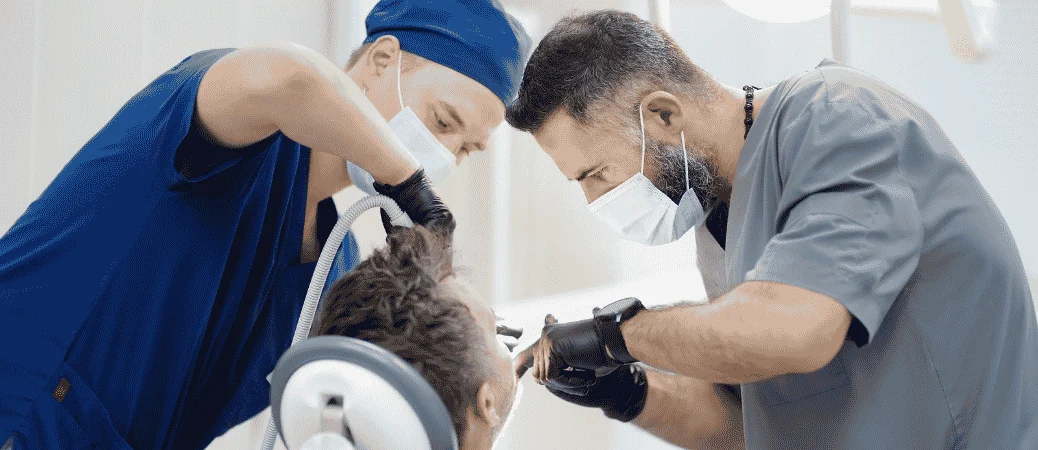
A strong gag reflex can turn a simple dental visit into something you dread. Even a routine cleaning or a quick X-ray can trigger gagging, choking, or panic before the dentist barely gets started.
If this sounds like you, you’re not alone, and there are real options that can help.
Sedation dentistry for gag reflex can calm your body’s response enough to make dental visits manageable, even if you have a severe gag reflex.
Depending on how strong your reflex is, your dentist might suggest something light like nitrous oxide, or a stronger option like oral or IV sedation for more severe cases.
The right choice depends on your specific triggers and comfort needs, which your dentist can help you figure out.
This article walks you through how sedation works to control gagging, how to choose the sedation level that fits you best, and what other steps can support your comfort during treatment.
You’ll also learn how skipping care due to gagging can affect your oral health over time, and what to expect when you talk to your dentist about a plan that works for you.
Key Takeaways
- Sedation options can be matched to your gag reflex severity to keep dental visits more comfortable.
- Simple strategies, along with the right sedation choice, can reduce gagging triggers during treatment.
- Talking to your dentist about your gag reflex helps protect your long-term oral health by making regular care easier to get.
Table of Content
- How Sedation Can Help Control Gagging
- Choosing the Right Sedation Level
- Dental Procedures Made Easier With a Comfort Plan
- Non-Sedation Strategies That May Reduce Triggers
- Safety, Preparation, and the Dentist Consultation
- Why Addressing a Severe Gag Reflex Protects Oral Health
- Frequently Asked Questions
How Sedation Can Help Control Gagging
Your gag reflex involves nerves, muscles, and often your emotions too. Understanding how these pieces fit together can help you see why sedation works so well for many people.
What Happens During the Gag Reflex
Your gag reflex is your body’s way of protecting your throat from choking. When something touches the back of your mouth or throat, nerves send a signal that triggers a muscle spasm.
The glossopharyngeal nerve plays a big role here. It picks up sensations in your throat and sends the message to your brain that says “something is here, get rid of it.”
Some people have a more sensitive pharyngeal response than others. This means even a small touch, like a dental mirror or X-ray sensor, can set off gagging.
Your throat sensitivity level is different from everyone else’s. It’s not something you can control on purpose, which is why it can feel so frustrating during dental visits.
How Anxiety and Anticipatory Anxiety Intensify Symptoms
Your mind and body work together more than you might think. When you feel dental anxiety, your muscles tense up, including the ones in your throat and jaw.
This tension can make your gag reflex sensitivity even worse. You might start gagging before the dentist even touches your mouth, just from feeling nervous.
Dental fear can also create a cycle that’s hard to break. You worry about gagging, which makes you more anxious, and that anxiety makes gagging more likely.
Many people develop what’s called anticipatory anxiety. You start feeling nervous days or even weeks before your appointment, and your body reacts as if the visit is already happening.
What Sedation Can and Cannot Do
Sedation for gag reflex issues works by calming your nervous system. This helps quiet the automatic reflex that causes gagging, and it can make treatment much easier for you and your dentist.
Conscious sedation options range from mild to deep, depending on your needs. Nitrous oxide, oral sedatives, and IV sedation are common choices that dentists use for gag reflex control.
Here’s what sedation typically helps with:
- Reducing throat sensitivity during treatment
- Lowering anxiety that triggers gagging
- Helping you relax enough to sit through longer procedures
- Making it possible to complete work that felt impossible before
Sedation cannot fully remove your gag reflex or guarantee zero gagging. Some evidence, including dental research on gagging interventions, shows that even well-studied methods don’t work the same for everyone.
Your dentist will match your sedation level to how severe your gagging is, since matching sedation type to reflex severity tends to give the best results with the least amount of medication needed.
Choosing the Right Sedation Level
The right sedation option for you depends on how strong your gag reflex is and how it affects your ability to sit through treatment. Here’s how each level works, from the lightest option to the deepest.
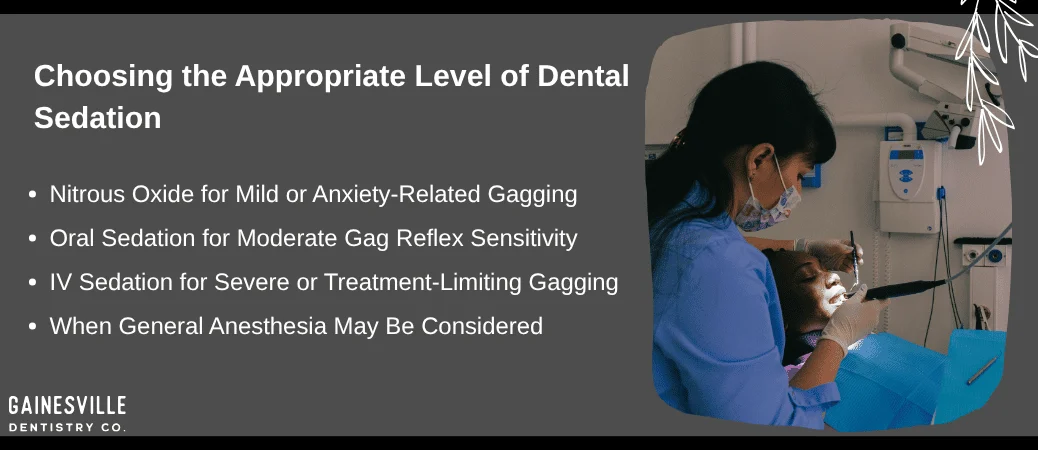
Nitrous Oxide for Mild or Anxiety-Related Gagging
If your gag reflex is mostly tied to nerves, nitrous oxide sedation, also known as laughing gas, might be all you need. You breathe it in through a small mask over your nose, and it starts working within a few minutes.
Nitrous oxide helps you relax without putting you to sleep. You stay awake and can respond to your dentist the whole time.
One of the best parts is how fast it wears off. Once your dentist removes the mask, the effects fade quickly, so you can drive yourself home.
This makes it a good starting point among sedation options if your gagging is mild or shows up mostly when you’re anxious.
Oral Sedation for Moderate Gag Reflex Sensitivity
For a gag reflex that’s more than just nerves but not extreme, oral sedation may work better. Your sedation dentist will give you a pill to take before your appointment, usually about an hour ahead of time.
This method, sometimes called oral conscious sedation, makes you feel drowsy and deeply relaxed. You’ll still be conscious, but many people don’t remember much of the visit afterward.
Because the medication stays in your system longer than nitrous oxide, you’ll need someone to drive you home.
It’s a solid middle-ground choice when your gag reflex is strong enough to disrupt treatment, but not so severe that lighter options fail every time.
IV Sedation for Severe or Treatment-Limiting Gagging
When your gag reflex makes it nearly impossible to get through a cleaning or filling, IV sedation is often the better fit.
The medication goes directly into your bloodstream through a vein, so it works fast and your dentist can adjust the dose as needed during treatment.
This level of sedation puts you in a deeply relaxed state. You likely won’t remember the procedure at all afterward.
Because your reflexes and awareness are more reduced, you’ll need continuous monitoring throughout the appointment.
This makes IV sedation a strong option for people whose gag reflex has caused them to avoid dental care for years.
When General Anesthesia May Be Considered
General anesthesia is the deepest form of sedation, and it’s reserved for specific situations. You’re fully unconscious, so you won’t gag, feel anything, or remember the visit at all.
This option usually comes up when your gag reflex is combined with other factors, such as a complex surgical procedure, a difficult medical history, or a severe phobia that other sedation levels haven’t resolved.
It’s not typically the first choice for gag reflex alone.
Because of the deeper effects, general anesthesia requires a dental anesthesiologist and close monitoring throughout the visit.
If your dentist suggests this route, it’s worth discussing your full health history so they can plan safely.
Dental Procedures Made Easier With a Comfort Plan
A comfort plan can change how you handle common dental procedures, from quick checkups to longer treatment. Small adjustments to tools and techniques often make the biggest difference for a sensitive gag reflex.
Dental X-Rays, X-Ray Sensors, and Digital Imaging
Dental x-rays are often the first hurdle for people with a strong gag reflex. Traditional x-ray sensors can feel bulky in your mouth, which may trigger gagging before your dentist even starts.
Many offices now use smaller digital sensors that fit more comfortably. Digital imaging also captures images faster, so you don’t have to hold still as long.
Some dentists numb the area with a spray before placing sensors. Others let you sit in a more upright position, which can reduce the urge to gag.
Dental Impressions and Alternatives to Traditional Trays
Dental impressions are notorious for setting off a gag reflex. The trays filled with putty-like material sit far back in your mouth, and that alone can cause discomfort.
Luckily, you have options. Digital scanners now let dentists create 3D images of your teeth without any trays or goopy material.
If a traditional tray is still needed, your dentist can use smaller trays or place them at an angle. Breathing techniques and distraction, like tilting your head forward, can also help you get through the process with less stress.
Cleanings, Fillings, and Restorative Care
Dental cleaning appointments involve dental instruments moving around your mouth, which can be tricky if you gag easily. The same goes for fillings and other restorative dental care.
Your dental team can adjust their approach to keep you comfortable. For example:
- Using a numbing gel on the back of your tongue or throat
- Working in shorter intervals with breaks in between
- Positioning you slightly upright instead of flat back
These small changes can make dental cleanings and fillings feel far less overwhelming.
Longer Treatment Including Root Canals and Oral Surgery
Root canals and oral surgery require you to stay still for longer periods. This makes gag reflex issues even more of a concern.
For these procedures, sedation dentistry often plays a bigger role. Options like nitrous oxide or oral sedatives can help you relax so your body doesn’t overreact to instruments in your mouth.
Your dentist may also use a rubber dam during a root canal, which can actually reduce gagging by keeping saliva and debris away from your throat.
Talking with your dentist beforehand about your gag reflex helps them plan the right approach for your dental treatment.
Non-Sedation Strategies That May Reduce Triggers
If your gag reflex is sensitive, small changes to how you breathe, sit, and communicate during your visit can make a real difference.
Combined with numbing gels and gentler tools, these steps help many people get through treatment more comfortably without needing sedation.
Nasal Breathing, Positioning, and Planned Breaks
Nasal breathing is one of the simplest tools you have. Breathing through your nose instead of your mouth can calm your gag reflex and help you feel more in control.
Try slow, steady breaths in through your nose and out through your mouth while your dentist works.
Your seat position matters too. Sitting more upright, rather than lying flat, can reduce pressure at the back of your throat. This small adjustment often makes a strong gag reflex easier to manage.
Ask your dental professional for planned breaks. A quick pause every few minutes gives you time to swallow, breathe, and reset. Knowing breaks are coming can lower anxiety before it builds up.
Topical Numbing and Gentler Dental Technology
Topical numbing gel applied to the back of your throat or roof of your mouth can dull the sensitivity that triggers gagging. It’s applied before treatment starts and works within a few minutes.
Newer tools also help. The Wand, a computer-controlled anesthesia device, delivers numbing medicine at a slow, steady rate. This reduces the pressure and sudden sensations that often set off a sensitive gag reflex.
Smaller instruments and digital X-ray sensors are another option. Traditional X-ray film can feel bulky in your mouth, but digital sensors are often thinner and easier to tolerate.
Ask your dental professional which tools they use, since not every office has the same equipment on hand.
Distraction Techniques and Clear Communication
Distraction techniques give your brain something else to focus on besides your throat.
Listening to music, watching a show on a ceiling-mounted screen, or focusing on a breathing count can shift your attention away from the trigger point.
Clear communication with your dental professional also plays a big role in patient comfort. Agree on a hand signal before you start, so you can pause the moment you need to without speaking.
Talk through the steps of your visit beforehand, too. Knowing what’s coming next, like when a tool will touch the back of your mouth, can lower the surprise factor that often makes a strong gag reflex worse.
Safety, Preparation, and the Dentist Consultation
Sedation is generally safe when a dentist reviews your health history first and matches the sedation level to your needs.
Knowing what happens before, during, and after your visit can help you feel ready, and knowing when gagging needs a closer look can protect your overall health.
Health History and Factors That Affect Sedation Choices
Before you try sedation dentistry, your dentist will ask about your health history. This helps them pick a safe option for you.
Some conditions can change which sedation works best. For example, acid reflux can make gagging worse, so your dentist may need to plan around it.
Your dentist will also ask about:
- Current medications and supplements
- Allergies, including to latex or numbing agents
- Heart, lung, or breathing problems
- Anxiety or past bad experiences with dental care
- Pregnancy or plans to become pregnant
Be honest about your health history. This helps your sedation dentist choose the safest option and avoid problems during treatment.
What to Expect Before, During, and After Sedation
Before your appointment, your dentist will explain the sedation options that fit your case. This might include nitrous oxide, oral sedation, or IV sedation, depending on how strong your gag reflex is.
You may need to avoid eating or drinking for a set time before deeper sedation. You will likely need someone to drive you home if you receive oral or IV sedation.
During treatment, your dentist will watch your breathing, heart rate, and comfort level closely. Most people feel relaxed, and some do not remember much of the visit at all.
Afterward, you may feel groggy for a few hours. Plan to rest, skip driving, and avoid big decisions until the sedation wears off fully.
When Gagging May Need Medical Evaluation
Most gagging is just a strong reflex, but sometimes it points to something more. If gagging happens outside the dental chair too, it may be worth mentioning to your regular doctor.
Signs that may need a closer look include:
- Gagging with no clear trigger
- Trouble swallowing food or liquids
- Frequent heartburn or reflux symptoms
- Gagging that has gotten worse over time
- Gagging linked to weight loss or throat pain
A severe gag reflex can also lead to dental avoidance, which can hurt your oral health over time. If you’re skipping checkups because of gagging, tell your dentist.
They can help you find a sedation plan that makes care easier to manage.
Why Addressing a Severe Gag Reflex Protects Oral Health
A severe gag reflex often leads to skipped dental visits, which can let small problems turn into big ones.
Getting it under control helps you stay on track with checkups, catch issues early, and avoid painful and costly treatment down the road.
Breaking the Cycle of Avoidance and Anxiety
If your gag reflex makes dental visits stressful, you might start putting them off. This leads to dental avoidance, which can turn into a habit that’s hard to break.
The longer you wait, the more nervous you may feel about going back. This creates a cycle where anxiety and avoidance feed off each other.
Sedation dentistry can help you break this pattern. When you feel calm and comfortable during treatment, you’re less likely to dread your next visit.
Over time, this can help you build trust with your dentist. You may even find that dental visits become a normal part of your routine instead of something to fear.
Keeping Up With Preventive Care

Regular dental care depends on you actually showing up for appointments. Skipping visits because of gagging means missing out on regular dental checkups, including cleanings, exams, and X-rays that can catch problems early.
Preventive care is what keeps small issues from turning into big ones. Without it, plaque and tartar build up, which raises your risk for cavities and gum disease.
Sedation options let you get through these routine visits without the stress that usually comes with a strong gag reflex. This makes it easier to stick to a regular schedule, like every six months.
Staying consistent with preventive care protects your smile and can save you time and money later.
Treating Problems Before They Become More Complex
When gagging keeps you from getting treatment, minor issues can quietly get worse. A small cavity left untreated can grow into a problem that needs a root canal or extraction.
Gum disease works the same way. Caught early, it’s often manageable with a deep cleaning. Left alone, it can lead to bone loss and even tooth loss.
Sedation dentistry makes it possible to complete treatment in one visit instead of stopping partway through because of gagging. This means your dentist can address problems while they’re still simple to fix.
Taking care of issues early usually means less discomfort, shorter appointments, and lower costs compared to waiting until the problem becomes more serious.
Frequently Asked Questions
Here are answers to common questions about sedation and severe gag reflexes at the dentist.
Can sedation help reduce a severe gag reflex during dental treatment?
Yes, sedation can help. It works by depressing the central nervous system pathways that control your gag response.
This means your body doesn’t react as strongly when something touches the back of your mouth or throat. You may still feel some sensation, but it should be much less intense.
What types of dental sedation are available for adults with a strong gag reflex?
There are a few options your dentist may use. The right one depends on how severe your gag reflex is.
For mild cases, nitrous oxide (laughing gas) often works well. If your reflex is moderate, oral sedation might be a better fit. For severe cases, IV sedation is usually recommended because it provides a deeper level of relaxation.
Will I still gag while under nitrous oxide or oral sedation?
You might still gag a little, especially with nitrous oxide. This type of sedation is lighter, so it may not fully block the reflex for everyone.
Oral sedation tends to work better for people with a moderate gag reflex. It relaxes your body more than nitrous oxide, which can reduce gagging further.
Does IV sedation or propofol suppress the gag reflex more effectively?
IV sedation is generally more effective at controlling a severe gag reflex. It acts as a muscle relaxant that suppresses the gag reflex more than lighter forms of sedation.
You’ll still be able to breathe on your own and respond to your dentist if needed. Most people don’t remember much of the procedure afterward.
What can my dentist do to help if I have a severe gag reflex?
Your dentist can start by asking about your triggers and how severe your gag reflex is. This helps them choose the right sedation method for you.
They may also use numbing sprays or gels on the back of your throat before treatment. Positioning your body differently in the chair can help too, since some angles trigger gagging more than others.
Is sedation dentistry safe for adults who struggle with gagging?
Sedation dentistry is considered safe when it’s done by a trained dental professional. Your dentist will monitor your breathing, heart rate, and other vital signs throughout the procedure.
Before your appointment, your dentist will review your health history to make sure sedation is a safe choice for you. This step helps avoid any unexpected reactions during treatment.